Defining Characteristics
- Low-profile, clean-lined furniture with crafted joinery
- A muted palette of warm neutrals and soft black
- Natural materials left honest and unfinished-looking
- Intentional negative space — emptiness as a feature
- A few handmade, imperfect (wabi-sabi) objects
- Soft, diffused natural light
Signature Materials & Finishes
- Pale oak, ash and bamboo
- Matte blackened steel
- Handmade ceramics and stoneware
- Linen, paper and woven textiles
- Honed stone and microcement
Color Palette
Rice Paper
#F2EEE6
Pale Oak
#D3BC96
Stone Grey
#B4ACA0
Clay
#9A7B5F
Ink Black
#26241F
Real Transformation
Japandi Galley Kitchen
A worn galley kitchen is reborn in Japandi style — pale oak, matte black accents and clean-lined simplicity bathed in natural light.
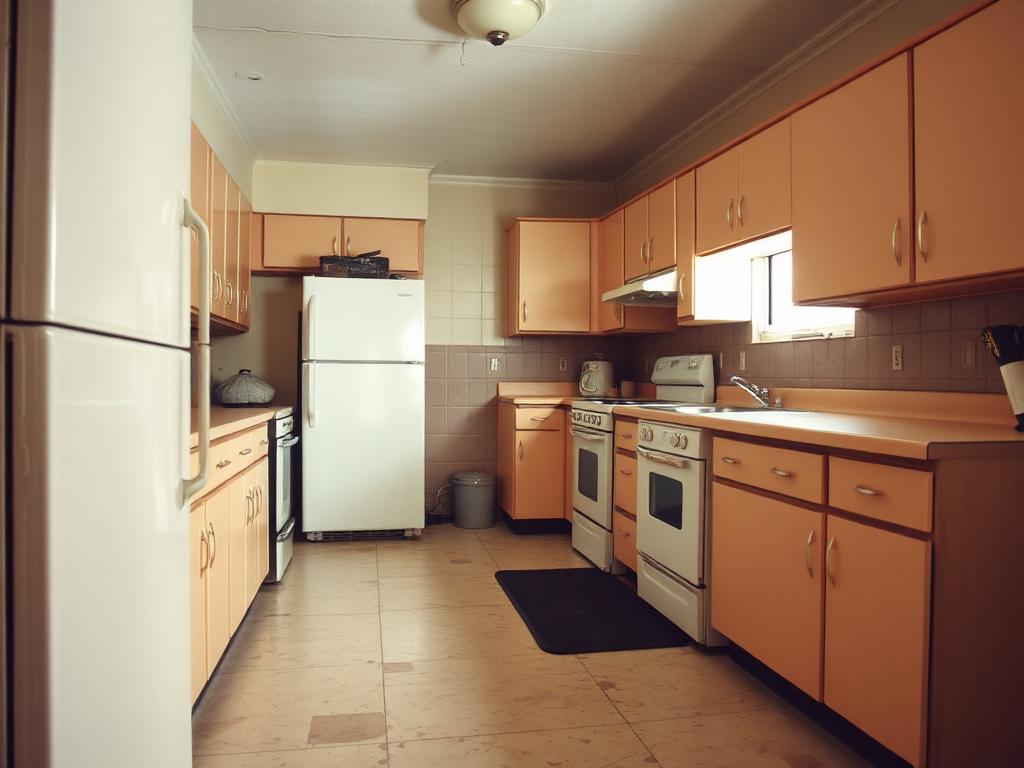 Before
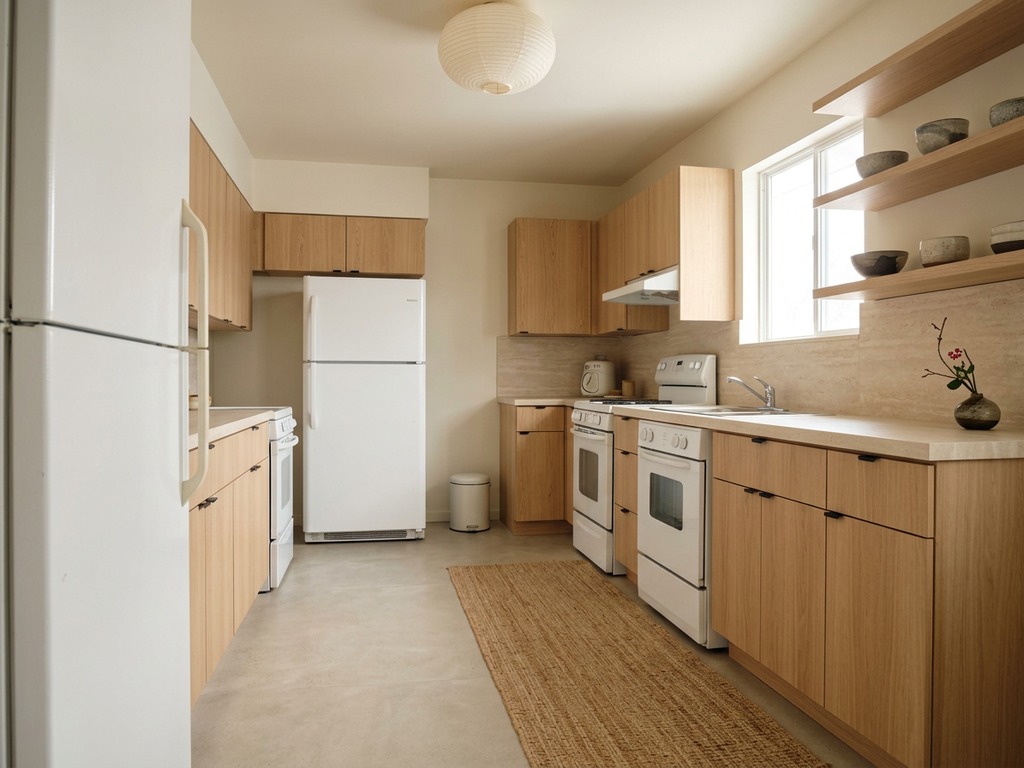 After — Japandi
Japandi Questions, Answered
What is the difference between Japandi and Scandinavian?
Scandinavian is brighter, whiter and more casual. Japandi adds Japanese depth — darker accents, lower furniture, more craft and more deliberate emptiness.
Is Japandi hard to live with?
It requires editing, not austerity. Closed storage hides daily clutter, and the warm woods and textiles keep it comfortable rather than severe.
What rooms suit Japandi best?
Kitchens and bedrooms shine in Japandi — both benefit from calm, order and natural materials. Try it on your own room photo to see the effect instantly.
See Japandi in your room.
One photo. Three concepts. Your actual space — not a stock render.
Redesign My Room in Japandi